

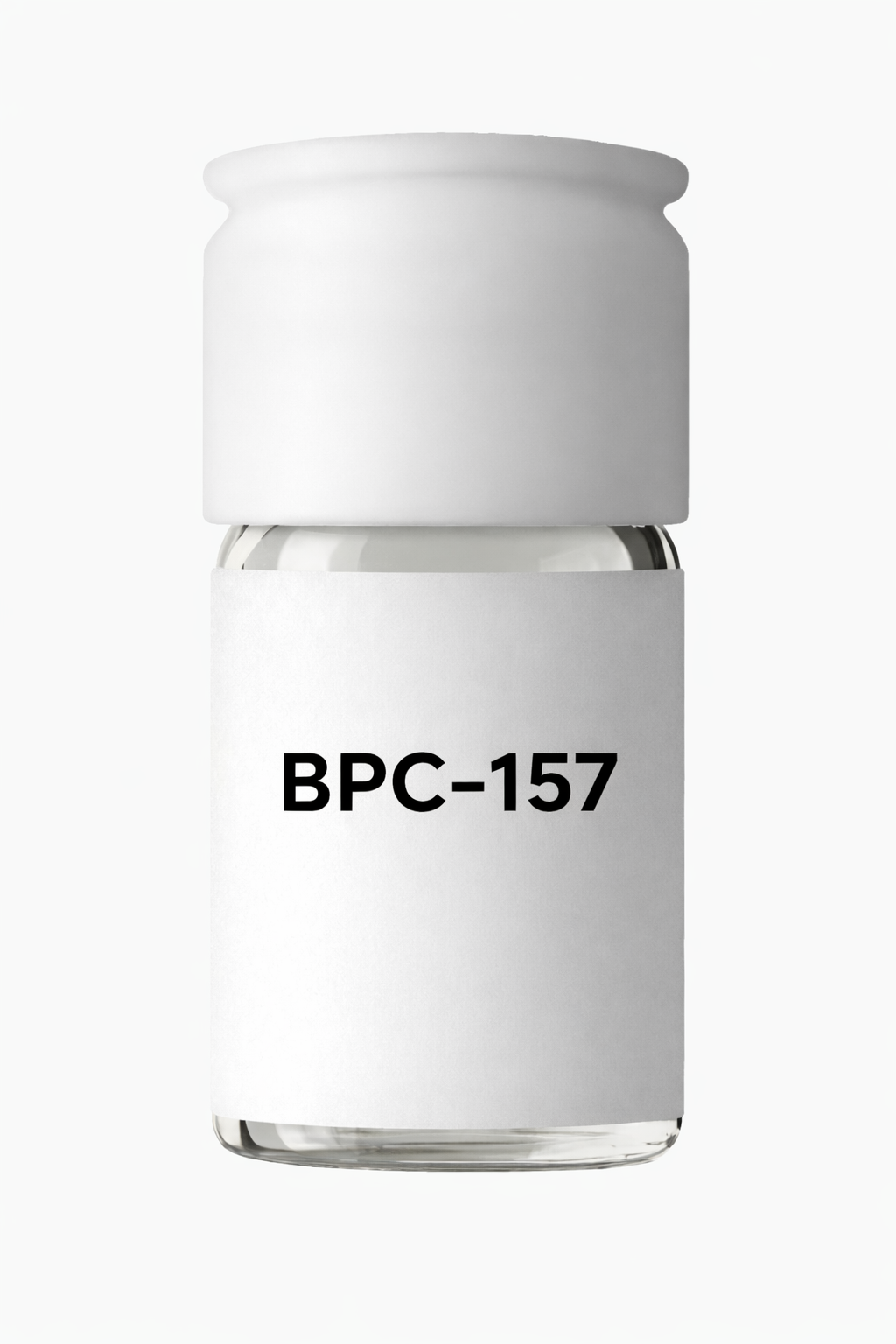
BPC-157 for Sale — Best 99%+ Purity, Third-Party Tested, USA Made
BPC-157 for sale — every 5mg vial is independently HPLC tested to 99%+ purity, shipped with a batch-specific Certificate of Analysis, and manufactured in the USA. If you are searching for BPC-157 for sale with fully verified, publicly accessible lab documentation, you have found the right source. We carry BPC-157 for sale in both lyophilized powder and solution formats, with same-day shipping on all in-stock orders.
FDA Update: BPC-157 was formally removed from the Category 2 restricted bulk drug substances list on April 22, 2026. The FDA has scheduled a PCAC review for July 23, 2026 to evaluate BPC-157 for inclusion on the 503A approved compounding list. This is the most significant regulatory development for BPC-157 for sale since its restriction in 2023.
BPC-157 for Sale — The Most Studied Healing Peptide in Research
When researchers look for BPC-157 for sale, they are sourcing the most extensively studied synthetic repair peptide available. BPC-157 — Body Protection Compound-157 — is a synthetic pentadecapeptide consisting of 15 amino acids, derived from a naturally occurring protective protein found in human gastric juice. It has been the subject of over 544 published articles from 1993 to 2024, with more than 180 PubMed entries indexed in 2025 alone — a 4× increase from 2020.
BPC-157 operates across four simultaneous healing mechanisms that distinguish it from every other research peptide for sale. It is not a single-pathway compound. Its documented effects span tendons, ligaments, muscles, gut lining, nerves, and skin — making it the most versatile tissue repair peptide available for research purposes.
Quality is the defining factor when you source BPC-157 for sale. A 2024 JAMA analysis found that nearly 50% of research peptides tested from online suppliers were either counterfeit, under-dosed, or substituted with cheaper substances. Our batch-specific COAs are publicly posted before every order. You verify the exact lot number on your vial against independently tested results before you spend a dollar.
How BPC-157 Works — Four Simultaneous Healing Mechanisms
The reason BPC-157 for sale generates such sustained researcher interest is its documented activity across multiple repair pathways simultaneously. Most compounds target one mechanism. BPC-157 targets four:
① Angiogenesis — VEGFR2 Activation
BPC-157 upregulates VEGFR2 (vascular endothelial growth factor receptor 2), stimulating new blood vessel formation at injury sites. In rat tendon models, capillary density increased by up to 52%. This directly addresses the primary bottleneck in connective tissue healing: poor blood supply. (PMID: 27847966 ↗)
② Growth Factor Upregulation
Beyond VEGF, BPC-157 increases EGF (epidermal growth factor) and growth hormone receptor expression in fibroblasts and endothelial cells. The 2025 systematic review by Vasireddi et al. confirmed BPC-157 enhances growth hormone receptor expression and multiple pathways involved in cell growth and angiogenesis across 36 qualifying studies.
③ Nitric Oxide System Modulation
BPC-157 modulates the nitric oxide (NO) pathway — a key regulator of vascular tone, inflammation, and tissue protection. Preclinical models demonstrate that this NO modulation underpins both its cytoprotective effects in gastric tissue and its anti-inflammatory action in musculoskeletal models.
④ Inflammatory Cytokine Reduction
BPC-157 reduces pro-inflammatory cytokines while preserving the functional immune responses required for healing. A March 2026 study published in International Journal of Molecular Sciences confirmed BPC-157 supports collagen synthesis, fibroblast activity, and modulation of nitric oxide pathways across muscle, tendon, ligament, bone, and gastrointestinal tissue.
What Researchers Study With BPC-157 for Sale
The published preclinical literature on BPC-157 covers five primary research domains. This is what the science community investigates when they source BPC-157 for sale:
Tendon & Ligament Repair
Staresinic et al. (2003) found BPC-157 significantly accelerated functional recovery in complete Achilles tendon transection models with histologically superior tissue organisation. Rotator cuff models showed VEGF upregulation of approximately 2.4-fold with measurably increased collagen synthesis within 14 days. (PMID: 12655558 ↗)
Gastrointestinal Protection
BPC-157 was originally identified from gastric juice proteins. It has demonstrated mucosal protection, lesion reversal, and cytoprotective effects across multiple GI models. It is one of the few research peptides with documented activity in both systemic tissue repair and direct GI tract protection.
Muscle Repair
BPC-157 has shown accelerated muscle fibre regeneration, improved myotendinous junction healing, and reduced inflammation in crush injury models. The angiogenic component is particularly relevant — new blood supply is the rate-limiting factor in muscle repair at the cellular level.
Neurological Research
Preclinical models indicate BPC-157 may have neuroprotective and neuroregenerative properties, with evidence of dopaminergic pathway modulation. Animal studies have shown beneficial effects in Parkinson’s disease and Alzheimer’s disease models, though this remains an early-stage research area.
A 2025 systematic review (Vasireddi et al., American Journal of Sports Medicine) screened 544 BPC-157 papers and included 36 qualifying studies — confirming consistent preclinical evidence across musculoskeletal, gastrointestinal, and neurological research applications. Read the full systematic review ↗
Is BPC-157 for Sale Legal in the USA? April 2026 Regulatory Update
Yes. BPC-157 for sale in the USA is legal to purchase for laboratory research purposes. It is classified as a research-use-only (RUO) compound — the same framework that covers TB-500, MOTS-c, and CJC-1295.
On April 22, 2026, BPC-157 was formally removed from the FDA’s Category 2 list of bulk drug substances that raise significant safety concerns. This followed the withdrawal of the original nominations that placed BPC-157 on the restricted list in 2023. The PCAC review is confirmed for July 23, 2026, where BPC-157 (both acetate and free base forms) will be evaluated for inclusion on the 503A approved compounding list — which would create a legal pathway for licensed compounding pharmacies to prepare it under physician prescription.
The regulatory trajectory for BPC-157 for sale has never been more positive. Source: FDA official 503A update document ↗
Note: BPC-157 for sale is not FDA-approved for any medical indication. It is not for human consumption. WADA removed BPC-157 from its prohibited list — it is not currently banned by WADA as of 2026.
BPC-157 for Sale — Full Research Specifications
| Parameter | Details |
|---|---|
| Chemical name | Body Protection Compound-157 |
| Format | Lyophilized powder |
| Vial sizes | 5 mg |
| Purity | ≥99% — HPLC independently verified |
| Identity testing | Mass Spectrometry confirmed, every batch |
| Documentation | Batch-specific COA — publicly accessible |
| Amino acids | 15 |
| Molecular weight | 1,419.5 Da |
| CAS number | 137525-51-0 |
| Storage — lyophilized | 2–8°C · Stable up to 24 months |
| Storage — reconstituted | 2–8°C, use within 7 days · Freeze at −20°C for extended periods |
| Recommended solvent | Bacteriostatic water |
| Sequence | Gly-Glu-Pro-Pro-Pro-Gly-Lys-Pro-Ala-Asp-Asp-Ala-Gly-Leu-Val |
| FDA status | Removed from Category 2 — April 22, 2026 |
| WADA status | Not currently on prohibited list (2026) |
| Classification | Research use only. Not for human consumption. |
How to Find the Best BPC-157 for Sale — Purity & Quality Guide
Not all BPC-157 for sale is equal. With multiple vendors closing in 2025–2026 due to quality failures and regulatory actions, knowing how to evaluate a supplier has never been more important.
The Standard for BPC-157 for Sale You Can Trust
Every batch of our BPC-157 for sale is tested by an independent ISO/IEC 17025 accredited laboratory — never in-house. We publish batch-specific COAs before you order. You verify the lot number on your vial against the posted results. This is the standard. Most suppliers do not meet it.
Every batch of BPC-157 for sale from us covers:
- Identity — Mass Spectrometry
- Purity % — HPLC chromatography
- Concentration accuracy
- Heavy metals panel
- Microbial limits test
- Batch-specific COA issued
Red Flags When Sourcing BPC-157 for Sale
- No publicly accessible batch-specific COA — a COA must match the exact lot number on your vial, not a generic product-line report from months ago.
- Price significantly below market rate — quality BPC-157 for sale runs $35–$55 per 5mg vial. Prices well below this signal sourcing shortcuts.
- No cold-chain shipping option — lyophilized BPC-157 is stable at room temperature short-term, but reconstituted product requires refrigerated transit.
- Vendor with no established track record — the industry lost multiple major suppliers in 2025–2026. History and community reputation matter.
- In-house testing only — any supplier that tests its own products without independent verification is grading its own homework.
BPC-157 for Sale vs. TB-500 — Which Peptide for Your Research?
When researchers look for BPC-157 for sale, they frequently compare it to TB-500 (Thymosin Beta-4). Both are used in tissue repair research, but their mechanisms are distinct and they are often studied together rather than as substitutes:
| Peptide | Primary Mechanism | Primary Research Focus | Route |
|---|---|---|---|
| BPC-157 ◀ For sale here | Angiogenesis, VEGFR2, NO modulation, cytokine reduction | Tendon, ligament, muscle, gut, nerve repair | Subcutaneous or oral |
| TB-500 | Actin regulation, cell migration, Thymosin Beta-4 pathway | Systemic tissue repair, wound healing, anti-inflammatory | Subcutaneous |
| BPC-157 + TB-500 stack | Complementary — non-overlapping pathways | Combined tissue repair protocols — most documented pairing in research | Both subcutaneous |
BPC-157 and TB-500 are the most commonly co-studied healing peptides in the literature. Their mechanisms are non-overlapping and complementary. Read our BPC-157 + TB-500 stack guide →
BPC-157 for Sale — Research Dosing Context & Storage
The following is provided strictly for research reference. All BPC-157 for sale on this page is intended for laboratory use only. Not for human consumption.
The published preclinical literature uses systemic doses of 2 mcg/kg to 10 mcg/kg, administered intraperitoneally or subcutaneously in rodent models. The first human IV safety pilot study (Lee & Burgess, 2025, Alternative Therapies in Health and Medicine) reported no adverse effects at doses up to 20 mg with plasma clearance within 24 hours. No lethal dose has been identified in toxicology studies.
Community research protocols applying allometric scaling commonly cite 250–500 mcg per administration. A 2025 Phase 2 human trial for rotator cuff tendinopathy used 250 mcg twice daily for 12 weeks and reported 38% pain reduction and 29% improved range of motion, though this study has not yet been peer-reviewed or independently replicated.
Storage Protocol for BPC-157 Research Vials
- Lyophilized vial (before reconstitution): Refrigerate at 2–8°C. Stable up to 24 months. Lyophilized BPC-157 is stable short-term at room temperature for shipping purposes.
- After reconstitution: Use within 7 days at 2–8°C. For extended research protocols, aliquot and freeze at −20°C.
- Reconstitution: Add bacteriostatic water gently down the side of the vial. Do not inject directly onto the powder. Swirl gently — do not shake or vortex.
- Oral administration research: Some protocols use acetic acid (0.6%) as reconstitution solvent for oral dosing models, as this may improve GI tract stability. Standard bacteriostatic water is used for injectable research protocols.
Stacking BPC-157 for Sale With Other Research Compounds
For research context only. Not medical advice.
- BPC-157 + TB-500: The most documented research pairing for tissue repair. BPC-157’s angiogenic and NO-pathway effects complement TB-500’s actin regulation and cell migration mechanism. Non-overlapping pathways studied together for joint, tendon, and muscle repair research.
- BPC-157 + GHK-Cu: GHK-Cu drives collagen synthesis and extracellular matrix remodelling through copper-mediated gene expression. Combined with BPC-157’s angiogenic mechanism, this pairing is studied in wound healing and tissue regeneration research.
- BPC-157 + MOTS-c: MOTS-c operates through AMPK activation in skeletal muscle — entirely distinct from BPC-157’s repair pathway. No mechanistic conflict has been identified in published literature.
- BPC-157 + CJC-1295 / Ipamorelin: CJC-1295 with Ipamorelin stimulates growth hormone release. BPC-157 upregulates growth hormone receptors in target tissues — these mechanisms have been studied as potentially synergistic in tissue repair research contexts.
Browse all tissue repair and recovery research peptides for sale →
BPC-157 for Sale — Frequently Asked Questions
-
Yes. BPC-157 for sale in the USA is legal to purchase for laboratory research purposes as a research-use-only (RUO) compound. On April 22, 2026, the FDA formally removed BPC-157 from Category 2 — it is no longer classified as raising significant safety concerns. A PCAC review is confirmed for July 23, 2026 to evaluate BPC-157 for 503A compounding approval. It is not approved for human consumption and is not for human use. Unlike MOTS-c, BPC-157 is not currently on the WADA prohibited list as of 2026. Source: FDA.gov ↗
-
BPC-157 (Body Protection Compound-157) is a synthetic 15-amino acid pentadecapeptide derived from a protective protein found in human gastric juice. Researchers source BPC-157 for sale because it is the most extensively studied synthetic repair peptide available — with over 544 published articles and 180+ PubMed entries in 2025 alone. Its four simultaneous mechanisms (VEGFR2-mediated angiogenesis, growth factor upregulation, nitric oxide modulation, and inflammatory cytokine reduction) make it relevant across tendon, ligament, muscle, GI, and neurological repair research.
-
The minimum acceptable standard when sourcing BPC-157 for sale is 99%+ purity verified by independent third-party HPLC testing. Identity must be confirmed by Mass Spectrometry. A batch-specific COA — not a generic product-line report — must be publicly available and correspond to the exact lot number on your vial. Every batch of our BPC-157 for sale meets all three of these standards without exception.
-
BPC-157 acetate and BPC-157 free base are two salt forms of the same peptide. BPC-157 acetate is the more commonly available form and what is typically meant when suppliers list BPC-157 for sale without specifying the form. BPC-157 free base is a purer form with no acetate counterion — it has a higher percentage of the active peptide by mass. Both forms are listed separately in the FDA’s April 2026 PCAC review schedule (July 23, 2026). When ordering BPC-157 for sale, confirm which form you are receiving and that the COA specifies the correct molecular identity.
-
Lyophilized BPC-157: refrigerate at 2–8°C, stable up to 24 months. Lyophilized powder is stable at room temperature for short periods (shipping), unlike some other peptides. After reconstitution with bacteriostatic water: use within 7 days at 2–8°C. For extended research protocols, aliquot into single-use volumes and freeze at −20°C. Reconstitute gently — add solvent down the side of the vial and swirl. Do not shake or vortex.
-
Oral BPC-157 research exists and is particularly relevant to gastrointestinal research protocols, where the peptide may act locally in the GI tract. Some preclinical models have used oral administration at higher doses (500–1000 mcg) given BPC-157’s gastric origin and demonstrated GI stability. However, oral dosing is generally considered less effective for systemic tissue repair applications compared to subcutaneous administration due to bioavailability limitations. When sourcing BPC-157 for sale for oral protocol research, standard lyophilized powder reconstituted in water or dilute acetic acid is the most documented approach.
-
No. BPC-157 and TB-500 are two entirely separate compounds with different amino acid sequences, mechanisms, and molecular weights. They are frequently researched together because their mechanisms are complementary and non-overlapping — BPC-157’s angiogenic and NO-pathway activity pairs with TB-500’s actin regulation and cell migration effects. We offer both individually and as a combined research bundle. See our BPC-157 + TB-500 stack page for full specifications on both compounds.
-
A 2025 systematic review by Vasireddi et al. identified 544 published articles on BPC-157 spanning 1993 to 2024 across PubMed, Cochrane, and Embase. PubMed indexed over 180 BPC-157 results in 2025 alone — a fourfold increase from 45 in 2020. After screening, 36 studies met inclusion criteria (35 preclinical, 1 clinical). No other synthetic repair peptide for sale has a research bibliography of comparable depth or consistency. Read the full 2025 systematic review ↗
Published Research Supporting BPC-157 for Sale
All references link directly to PubMed or the original publisher. These are the primary studies behind every vial of BPC-157 for sale on this page.
- Sikiric P, et al. (2018). Stable gastric pentadecapeptide BPC 157 as a therapy and safety key: a special beneficial pleiotropic effect controlling and modulating angiogenesis and the NO-system. Current Pharmaceutical Design. PMID: 29600756 ↗ — Comprehensive review of BPC-157 mechanisms including angiogenesis control and nitric oxide system modulation across multiple tissue types.
- Chang CH, et al. (2011). Therapeutic potential of pro-angiogenic BPC157 is associated with VEGFR2 activation and up-regulation. Journal of Molecular Medicine. PMID: 27847966 ↗ — Confirmed BPC-157 promotes angiogenesis via VEGFR2-Akt-eNOS signalling, increasing vessel density and blood flow recovery in ischemic muscle.
- Staresinic M, et al. (2003). Tendon healing in BPC-157-treated complete Achilles transection rat models. PMID: 12655558 ↗ — Significantly faster functional recovery and histologically superior tendon tissue organisation with BPC-157 treatment.
- Vasireddi N, et al. (2025). Emerging Use of BPC-157 in Orthopaedic Sports Medicine: A Systematic Review. American Journal of Sports Medicine. Full review ↗ — 544 articles screened, 36 included. Confirmed BPC-157 enhances growth hormone receptor expression and pathways involved in cell growth and angiogenesis while reducing inflammatory cytokines.
- Bove M, et al. (2026). From Regeneration to Analgesia: The Role of BPC-157 in Tissue Repair and Pain Management. International Journal of Molecular Sciences, 27(6), 2876. Full paper ↗ — Published March 2026. Confirms BPC-157 supports angiogenesis, collagen synthesis, fibroblast activity, and NO pathway modulation across muscle, tendon, ligament, bone, and GI tissue.
- Lee E, Burgess K. (2025). Safety of Intravenous Infusion of BPC-157 in Humans: A Pilot Study. Alternative Therapies in Health and Medicine, 31, 20–24. — First human IV safety pilot. No adverse effects at doses up to 20 mg. Plasma clearance within 24 hours.
- FDA (April 22, 2026). BPC-157 removed from 503A Category 2. PCAC review scheduled July 23, 2026. FDA.gov official source ↗
Related Research Compounds
BPC-157 is widely studied in tissue repair and regenerative research models and is often referenced alongside peptides and compounds involved in recovery, healing, and cellular signaling pathways.
-
TB-500 for Sale
— actin-regulating peptide studied in wound healing and tissue repair research. -
MOTS-c Peptide for Sale
— mitochondrial peptide studied in metabolic and energy regulation research. -
GHK-Cu for Sale
— copper peptide researched for collagen synthesis and skin/tissue repair pathways. -
MK-677 for Sale
— growth hormone secretagogue studied in recovery and anabolic research models. -
CJC-1295 for Sale
— peptide used in growth hormone release and endocrine research studies. -
Epithalon for Sale
— studied for telomerase activity and cellular aging pathways.
Reviews
There are no reviews yet.